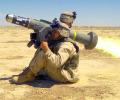
India has finalised a deal with the United States to acquire Javelin anti-tank guided missile systems, significantly enhancing the Indian Army's combat capabilities. This procurement, facilitated through the US Foreign Military Sales process, underscores the deepening bilateral defence partnership and opens avenues for future collaboration and co-production between the defence industries of both nations.

The proposed arrangement would involve sub-assembly kits produced at Lockheed Martin's facility in Troy, Alabama, and guidance electronics units manufactured at Raytheon's facility in Tucson, Arizona, being shipped to India for final assembly and integration.

Key discussions focused on major defence procurements, including India's plan to acquire six additional P-8I aircraft for anti-submarine warfare. The deal, estimated at around Rs 30,000 crore, is under advanced negotiations.

A dangerous flashpoint in United States-India relations faces visiting US Secretary of Defence, Leon Panetta, who faces tough questions from Indian officials on Tuesday, writes Ajai Shukla

India has decided to buy 8,356 Spike anti-tank guided missile and 321 launchers from Israel for Rs 3,200 crore, rejecting US offer of Javelin missiles that Washington was lobbying hard for.
India will send a request to the United States for procuring the Javelin anti-tank guided missile system, the Lok Sabha was informed on Monday.

The Indian Army is equipping its infantry battalions with drone platoons and raising elite commando units as part of a modernization drive to enhance combat capabilities along the northern and western frontiers. The Army is also procuring new carbines and upgrading its arsenal with advanced weaponry.
United States Deputy Secretary of Defence Ashton Carter, who arrived in India on a two-day visit on Monday, has masterminded a proposal that could dramatically boost US-India defence relations.

India and the United States have announced a groundbreaking 10-year defence partnership, paving the way for increased military cooperation and potential sales of F-35 stealth fighter jets. The agreement aims to bolster both countries' defence capabilities in the Indo-Pacific region, with plans for joint production of weapons and platforms. The move comes amid China's growing military presence in the region.

The United States has supplied Ukraine with thousands of Javelins, the anti-tank missiles that have become the iconic weapon of the war for Ukraine which has helped in pushing back Russian tanks.
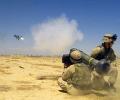
The defence ministry is finalising a decision to allow the FGM-148 Javelin missile, built by US companies Lockheed Martin and Raytheon, into a contest to supply the Indian Army with anti-tank guided missiles. This is bad news for Israelis
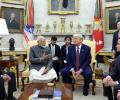
India and the United States have agreed to deepen their strategic partnership in several key areas, with President Donald Trump announcing plans to provide India with F-35 fighter jets and billions of dollars in military supplies. The two leaders also discussed energy cooperation, critical technologies, connectivity, and countering terrorism. They agreed to work together on the India-Middle East-Europe Economic Corridor, and Trump noted India's reforms to welcome US nuclear technologies. Prime Minister Modi said the two countries can shape a better world through their cooperation. Both leaders also addressed the Russia-Ukraine conflict, with Modi stressing India's commitment to peace.

Johnson said that he has travelled to Ukraine to meet President Zelenskyy in person and show solidarity with the Ukrainian people.

Using the ongoing Indo-US joint wargame Yudha Abhyas 09 as a platform, the US -- anxious to grab a major chunk of the lucrative Indian arms market -- will undertake live operations of its high-tech weaponry like the Stryker infantry armoured vehicles and Javelin anti-tank guided missiles.

Only 75 aircraft were deployed to support the invasion, observes Group Captain Murli Menon (retd).

India and the United States have in principle agreed to extend their defence agreement for another 10 years which will take forward the cooperation between the two countries in the crucial area.

Although Russian shelling has largely ceased in Kharkiv, the attacks destroyed many houses and large apartment buildings, especially in the northern part of the city, leaving thousands of residents homeless.

India has shortlisted five of the 17 hi-tech items of military hardware offered by the US for co-production and co-development under a one-of-its kind American offer to boost bilateral defence cooperation.

India must present its demands of America confidently, instead of fearing that its pocket will somehow be picked, says Ajai Shukla.

'As the tanks roll down Delhi's Rajpath and the C-17s fly overhead, there could be a lot brewing in Hyderabad House,' says Surya Gangadharan.

On the final day of Prime Minister Narendra Modi's visit to the US, that country on Tuesday extended its Defence Cooperation Agreement with India by another 10 years. The pact, which was to expire in June next year, will now be in force till 2025.

Defence projects worth a whopping Rs 80,000 crore were on Saturday cleared by the government which decided that six submarines will be made indigenously and over 8,000 Israeli anti-tank guided missiles and 12 upgraded Dornier surveillance aircraft will be purchased.

'The real test will be in defence-related deals, for instance the Javelin anti-tank missile: Is the US willing to co-develop something with India, on terms that will support the 'Make in India' initiative? Is there defence technology transfer? Or will it dump old junk on India?' asks Rajeev Srinivasan.

'India-US defence pacts are seen by many analysts as a subtle move to jointly contain China's growing militarism, especially in the strategic Indian Ocean Region.'
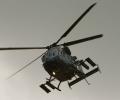
The defence ministry on Friday scrapped a scam-tainted tender worth over Rs 6,000 crore to procure 197 light helicopters from foreign vendors and decided to allow indigenous players to manufacture these choppers for the armed forces.
